
Shop Product Drop No. 6
Victorian charm. Mid-Century icons. And plenty in between. This week’s drop is just how we like it: a mix of styles, eras, and price points so everyone finds something they love.
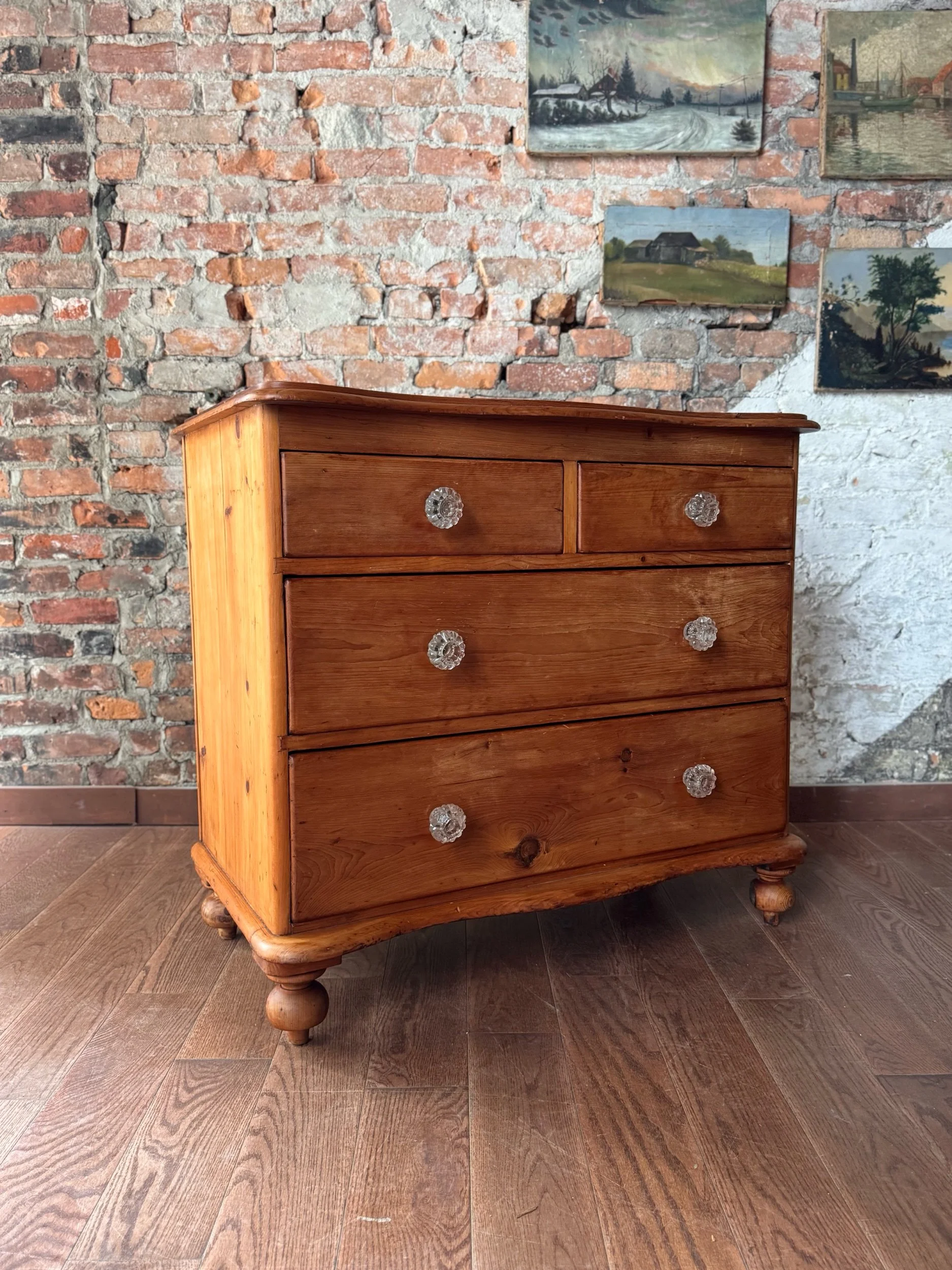
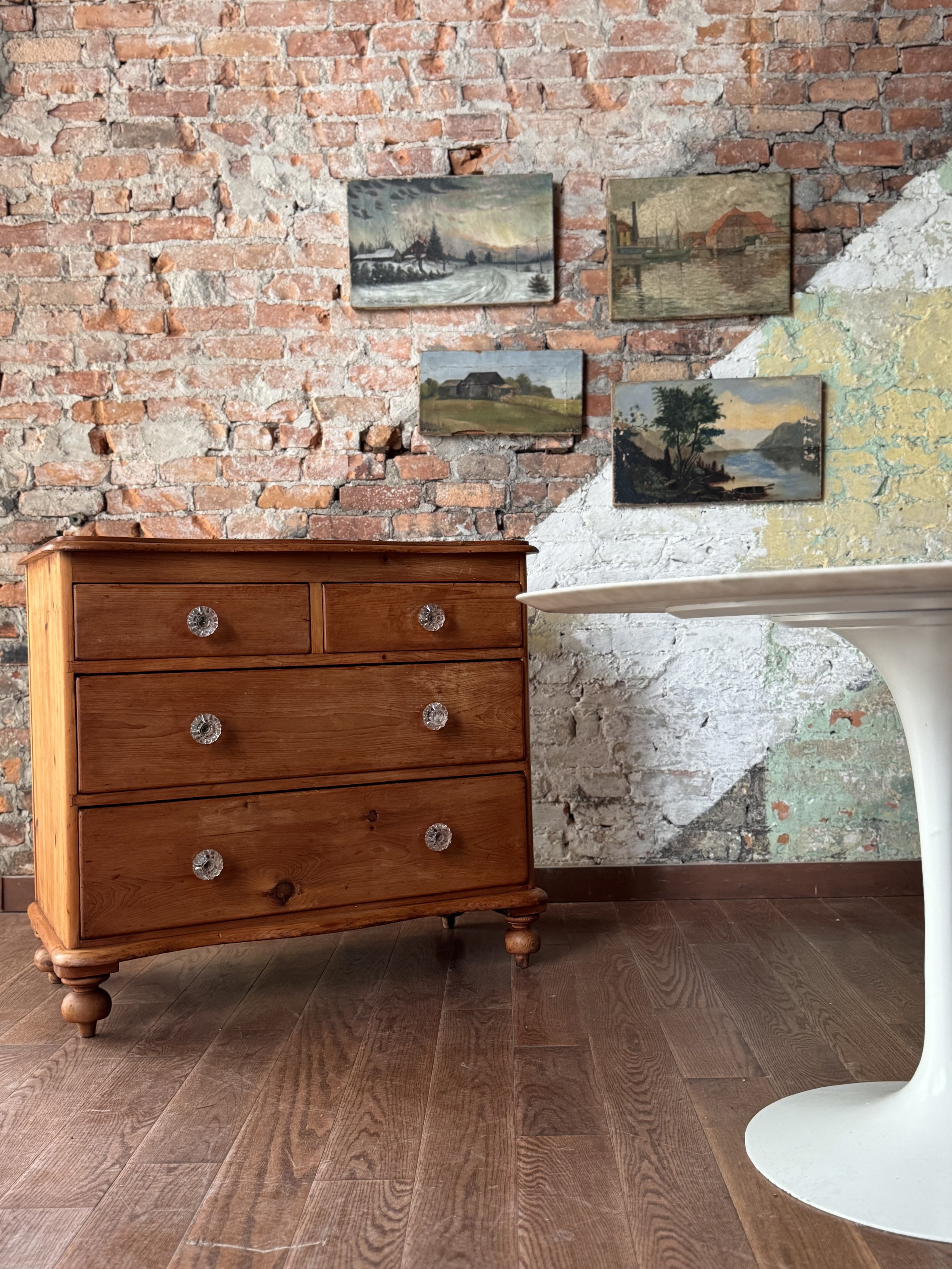
Warm, timeworn English pine at its best. This charming antique chest of drawers features a softly serpentine front, turned bun feet, and sparkling glass knobs that beautifully complement the honey-toned pine. The natural grain, knots, and subtle patina tell the story of a piece that has aged gracefully over time.
English pine furniture became especially popular in the 19th century as pine was abundant, durable, and easy for cabinetmakers to shape into elegant yet practical forms. Originally used in cottages and country homes across England, these pieces developed the rich color and character that collectors prize today. The wood’s warm tone deepens with age, making each piece uniquely expressive.
This chest offers four drawers, two smaller drawers above two full-width drawers, providing practical storage while maintaining a compact footprint. Traditional dovetail joinery and solid pine construction reflect classic craftsmanship, while the gently curved top and front add a touch of softness typical of English country design.
Today, antique pine remains beloved for its versatility: it pairs effortlessly with modern interiors, Scandinavian minimalism, or layered traditional spaces, bringing warmth and authenticity wherever it’s placed.
A beautiful and functional piece that works equally well as a bedroom chest, entryway storage, or a charming accent in a living space.
Dimensions:
37” wide x 18” deep (20.5” at the curved top) x 34.25” tall
Condition:
Good antique condition with expected wear consistent with age and use. One top drawer has an ink stain on the interior. One middle drawer is missing a piece of wood, which doesn’t impact functionality and is hidden when closed.
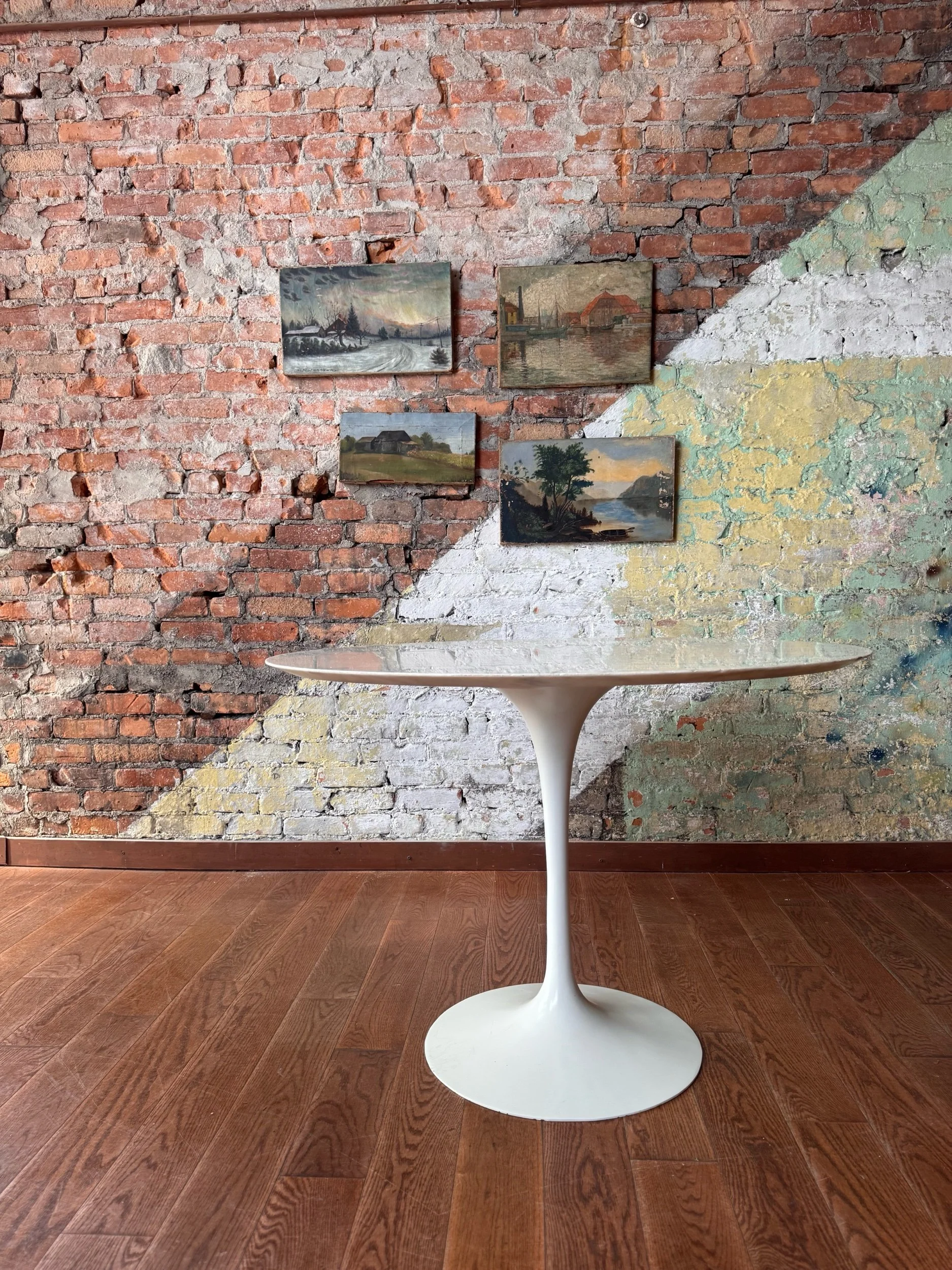
An iconic example of mid-century modern design, this early 1960s Tulip table was designed by Eero Saarinen for Knoll as part of his revolutionary Pedestal Collection. Saarinen famously set out to eliminate what he called the “slum of legs” beneath traditional tables and chairs, creating a sculptural single-pedestal base that remains one of the most recognizable forms in modern design.
Introduced in the late 1950s, the Tulip table quickly became a defining piece of the mid-century movement. The elegant pedestal base—cast aluminum with a molded coating—supports a beautiful marble top, allowing the natural veining of the stone to serve as the table’s primary ornamentation. The result is a piece that feels both architectural and effortless.
More than sixty years later, the design remains as fresh and influential as when it debuted. Early examples like this one, produced by Knoll in the early 1960s, reflect the era when modern design was reshaping American interiors and elevating furniture into sculptural form.
Equally suited for dining or as a statement table in a living space, the Saarinen Tulip table continues to be celebrated for its clean lines, visual lightness, and enduring design legacy.
Dimensions:
42” diameter x 28.25” tall
Condition:
Good vintage condition consistent with age and use. The marble top shows several small edge chips and minor surface wear. The pedestal base has scattered scratches and small chips to the finish from normal use over time. These signs of wear are typical for an early example and do not detract from the table’s structural integrity or iconic presence.
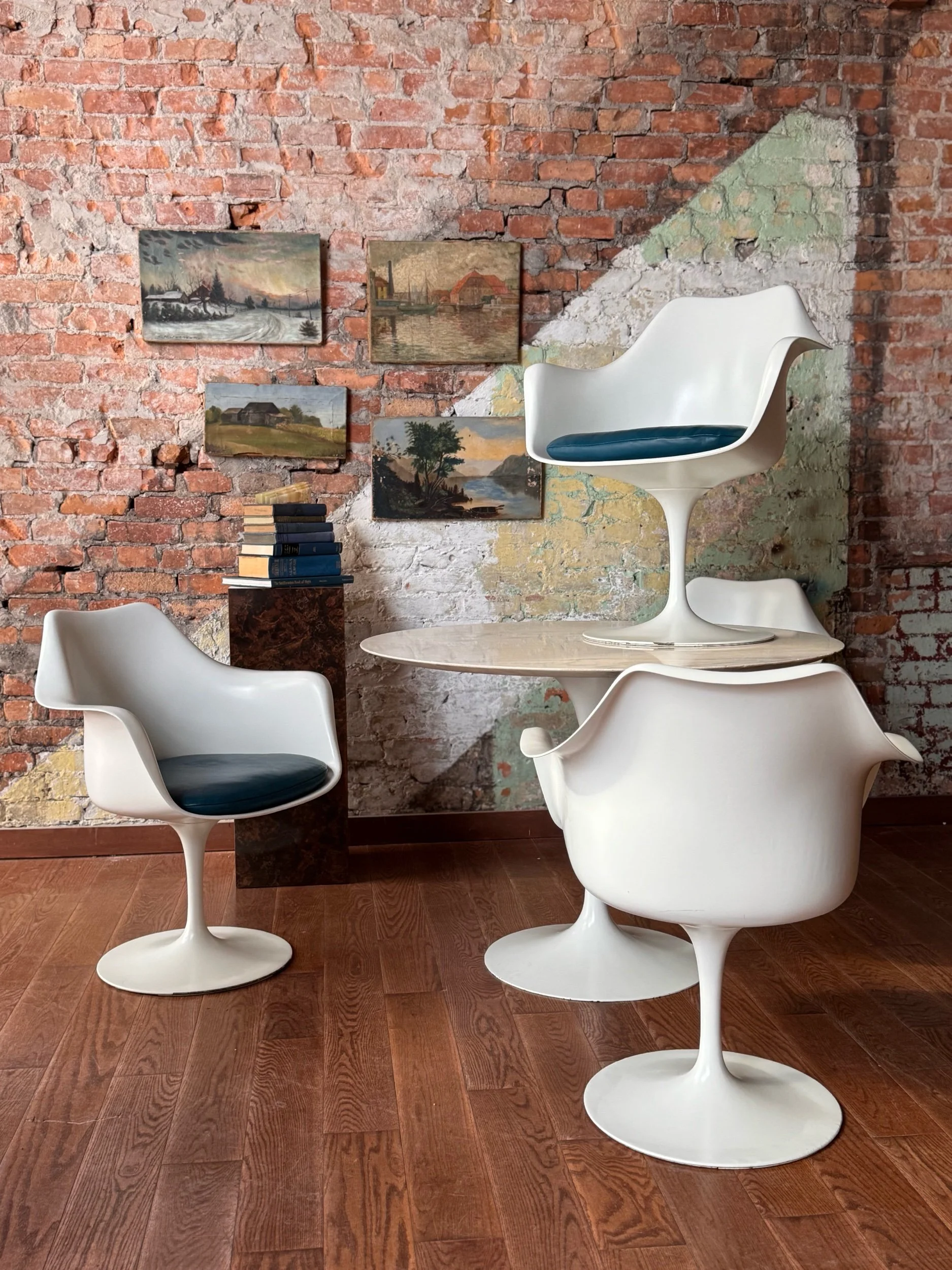
A classic set of four Tulip armchairs designed by Eero Saarinen for Knoll, dating to the early 1960s. Part of Saarinen’s groundbreaking Pedestal Collection, these chairs were created to eliminate what he famously described as the “slum of legs” beneath traditional tables and seating.
Introduced in the late 1950s, the Tulip chair quickly became one of the defining forms of mid-century modern design. The sculptural pedestal base, cast in aluminum and finished in white, supports a molded fiberglass shell that curves seamlessly into integrated arms. The result is a chair that feels both futuristic and remarkably comfortable—an enduring icon of modern design.
This early set retains its original shells and pedestal bases, each stamped beneath. The seat pads have been later upholstered in rich teal leather, adding a subtle contemporary contrast to the crisp white forms.
Elegant from every angle, Saarinen’s Tulip chairs remain as relevant today as when they were introduced—perfect paired with a Tulip table or used as sculptural seating in a modern interior.
Approximate Dimensions (each):
23” wide x 21” deep x 31–32” tall
18” seat height (approx.)
Condition:
Good vintage condition consistent with age and use. The pedestal bases show scattered small chips and wear to the white finish. The fiberglass shells show minor surface marks from use. It’s possible the chairs were at some point refinished with white paint. Seat cushions are later replacements upholstered in teal leather. Structurally sound and presenting beautifully overall.
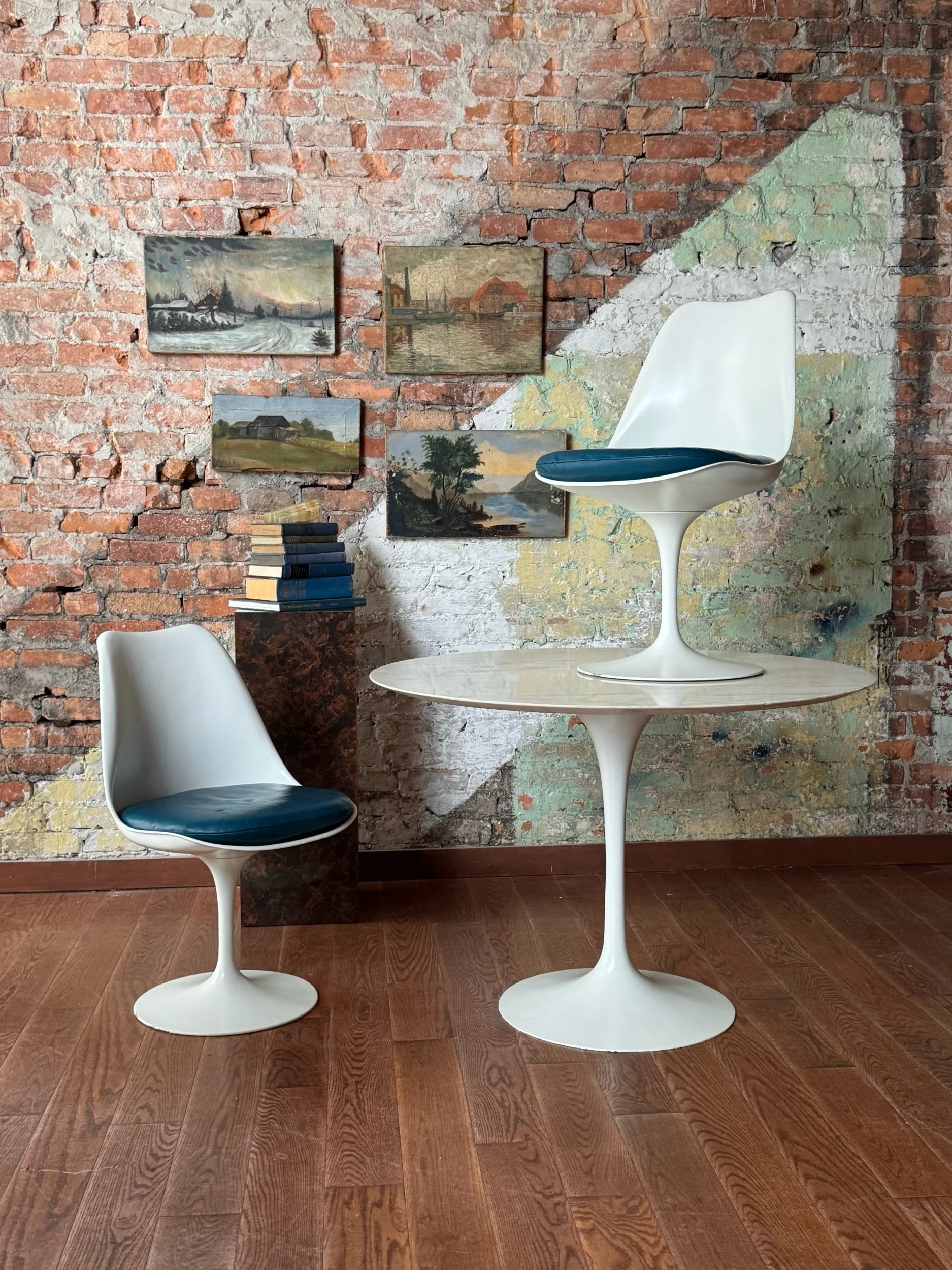
A pair of iconic Tulip side chairs designed by Eero Saarinen for Knoll, dating to the 1960s. These sculptural chairs are part of Saarinen’s celebrated Pedestal Collection, introduced in 1957 as a radical solution to what he called the “slum of legs” created by conventional table and chair bases.
Saarinen’s vision replaced traditional four-legged furniture with a single, fluid pedestal, creating a clean and unified form that transformed modern interiors. The molded fiberglass shells gently cradle the body while the cast aluminum pedestal bases provide both strength and visual lightness. More than sixty years later, the Tulip chair remains one of the most recognizable and influential designs of the mid-century modern movement.
This pair retains their original shells and pedestal bases, with Knoll markings visible beneath, including a “Knoll Associates” sticker with a Madison Avenue NY22 address and no zip code. The seat cushions have been later upholstered in rich teal leather, offering a sophisticated contrast against the white shells while preserving the chair’s timeless silhouette.
Perfect around a Saarinen dining table or used individually as accent seating, these chairs remain a cornerstone of modern design history.
Dimensions (each):
19” seat width
17.5” seat depth
18” seat height
32” total height
Condition:
Good vintage condition consistent with age and use. The pedestal bases show scattered chips and wear to the white finish. The fiberglass shells show light surface marks from use. It’s possible the chairs were at some point refinished with white paint. Seat pads are later replacements upholstered in teal leather. One chair is missing internal hardware, causing the base to separate from the seat if the chair is lifted by the seat; however, the chair functions normally when in use. Structurally stable overall with expected wear for pieces of this age.
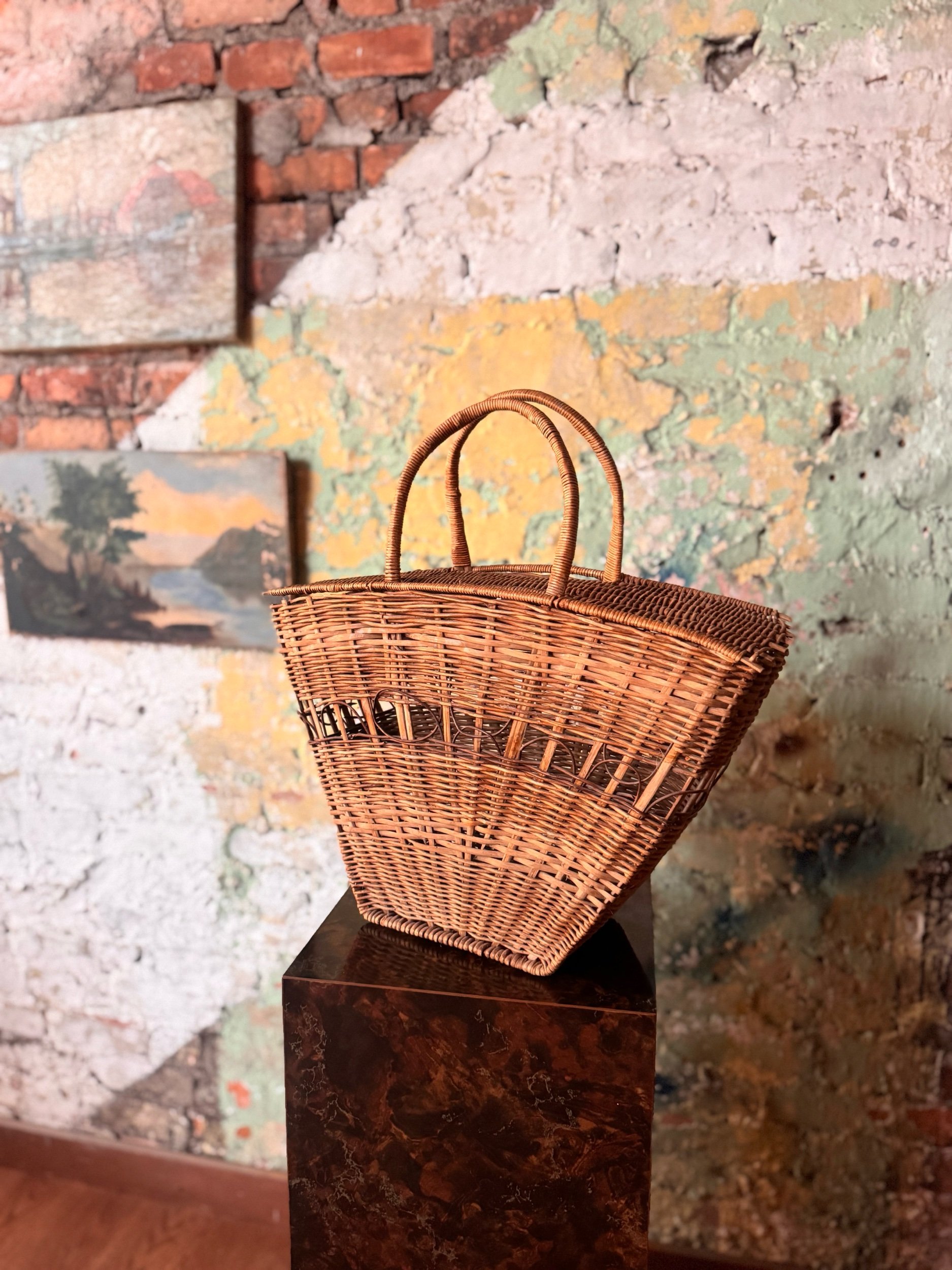
A beautifully woven early 20th century European market basket, handcrafted from split willow with a distinctive open lattice band and tall wrapped handles. Pieces like this were once carried through village markets across Belgium and Northern France, used to transport fresh bread, vegetables, and eggs home from weekly market days.
The basket’s tapered form and hinged lid were designed to keep goods protected while walking or cycling through town. Today, its warm patina and sculptural weave make it equally at home styled in a kitchen, used for storage, or displayed as a quiet reminder of everyday life in the European countryside.
Dimensions
20” wide at top
7.5” wide at base
13” tall, 20” tall w/ handle